The definition of zero tolerance
When Ethnos360/New Tribes Mission leadership uses deceptive and alternative definitions
ABUSELEADERSCULTURETRUSTWORTHINESSBRIAN COOMBSBRIAN SHORTMEIERLARRY BROWNSTEVE SANFORD
3/26/20263 min read


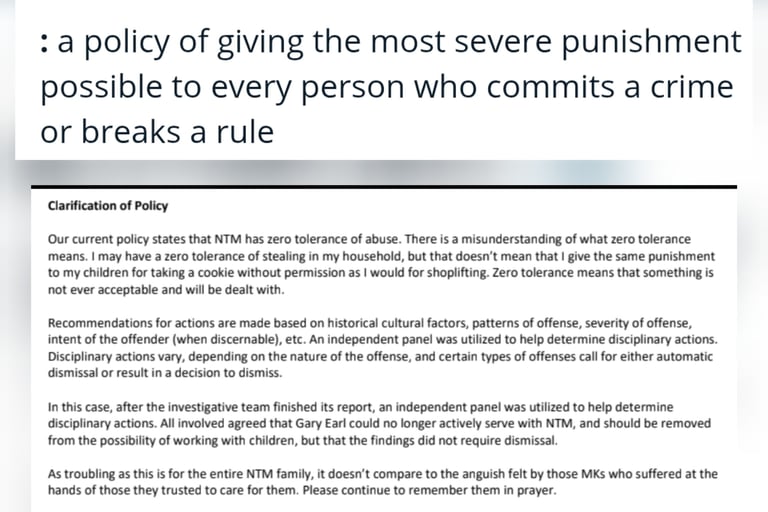
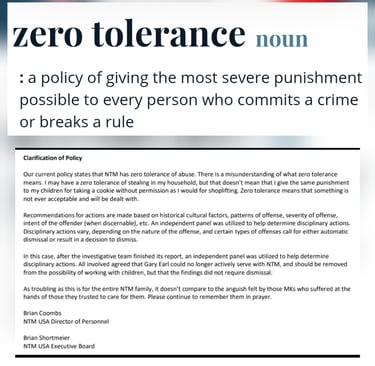
What does zero tolerance mean? According to Merriam-Webster, it means "a policy of giving the most severe punishment possible to every person who commits a crime or breaks a rule." Ethnos360/New Tribes Mission frequently uses the term "zero tolerance" to describe its abuse policy. Even a recent email to members responding to how they handled Josh Weeks says, "We maintain a zero-tolerance policy for any form of abuse." This term has been what they use to claim they are strict on abuse for at least a decade.
Since there is a standard definition of what zero tolerance means, most people assume that their response to child abuse would result in the offender being dismissed from the organization. That seems like the bare minimum implementation of "most severe punishment." That is not the definition that the current leadership abides by.
When they were responding to the abuse of Gary Earl, they decided someone who abused multiple children could retire, which would allow him to continue to receive funding through Ethnos360 and thus be able to represent himself as a retired missionary. Does retirement seem like the "most severe punishment"? It didn't seem like it to many missionaries at the time. When missionaries attempted to hold leadership accountable for their policy, leadership sent an email explaining why these members were just "misunderstanding." According to the email, zero tolerance does not mean what you think it means, what the dictionary definition would lead you to believe. They used an outrageous analogy: a "zero tolerance" policy for stealing doesn't mean you get the same consequence for stealing a cookie as you would for shoplifting. They blamed the "recommendations panel," a convenient scapegoat and process that former panelists claim leadership manipulated so they could control the outcomes, and said they didn't need to follow either their policy or the basic definition of "zero tolerance" and that Gary Earl did not need to be dismissed (although they did eventually adjust the status from retired to resigned).
All Ethnos360 members, supporters, and supporting churches should understand what Ethnos360 means when they say zero tolerance. It sounds nice, and it's intended to lead you to believe that they decisively and harshly respond to abuse, but when their friend or colleague is found, by their own investigation, to have abused a child, they reserve the right to cushion the response and pave his way to a respected and comfortable retirement. And if you call them out on what seems to be a clear lack of adherence to policy, they'll act like you're crazy and adamantly refuse even to dismiss the abuser.
If you bring this concern to them today, they'll say it's historical, but remember, this email was signed by current leader Brian Coombs, and this decision was made while Larry Brown, Steve Sanford, and Dan Falls were members of the leadership team. Additionally, current leader Keith Copley was on the leadership team in PNG that reportedly oversaw the decision to allow Gary Earl, after he was already found by the investigation to have abused children, to stay in an active dorm. That means 5 of the 6 current leaders played a role in overseeing the decisions, refused accountability, and received zero consequences (Keith Copley subsequently being promoted to the executive leadership team).
They'll tell you to trust them. They'll tell you they care about children. They'll tell you these are good and nice men who have the best intentions. The bottom line is that the safety of children depends on actions and not words, and these actions -- with no accountability, no repentance, and no changed behavior -- leave children at risk.